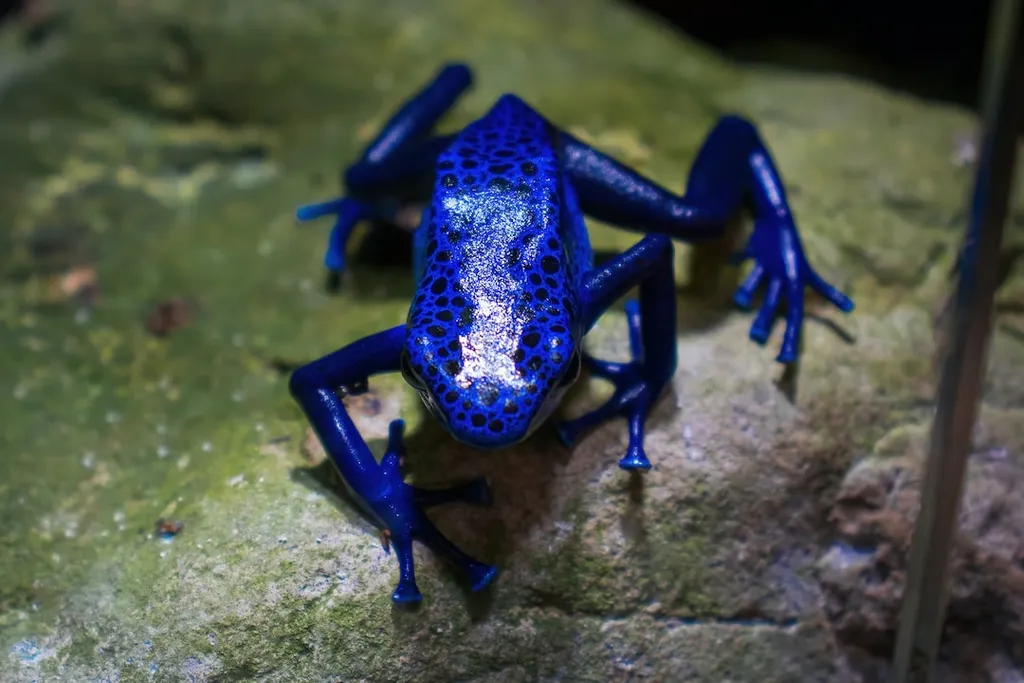
The blue poison dart frog, with its vibrant blue coloration and lethal toxicity, is a creature that captivates our imagination. Behind its stunning appearance lies a deadly secret that has fascinated scientists and nature enthusiasts for years. In this article, we delve into the intriguing world of the blue poison dart frog, exploring its lethal defense mechanism, the potency of its poison, and its unique adaptations for survival.
Have you ever wondered why this small frog is considered one of the most toxic creatures on the planet? We unravel the mysteries of the blue poison dart frog’s poisonous skin, revealing how its diet plays a crucial role in acquiring and concentrating its deadly toxin. Discover how a single touch can be lethal to predators, and how indigenous people have utilized this toxic secret for hunting.
But there’s more to the blue poison dart frog than its deadly poison. We also explore its fascinating behavior, including its vocal communication and social interactions. Learn about their unique calls, begging choruses, and the posturing displays they engage in to defend their territories. Dive into the world of courtship and parental care, where these small frogs showcase their intricate behaviors and contributions to the rainforest ecosystem.
The blue poison dart frog is a marvel of nature, and this article uncovers the many curiosities surrounding this extraordinary creature. Whether you’re fascinated by its lethal defense mechanism or intrigued by its complex social interactions, join us on this journey to unravel the intriguing secrets of the blue poison dart frog.
The Toxic Secret of the Blue Poison Dart Frog: Understanding its Deadly Poison
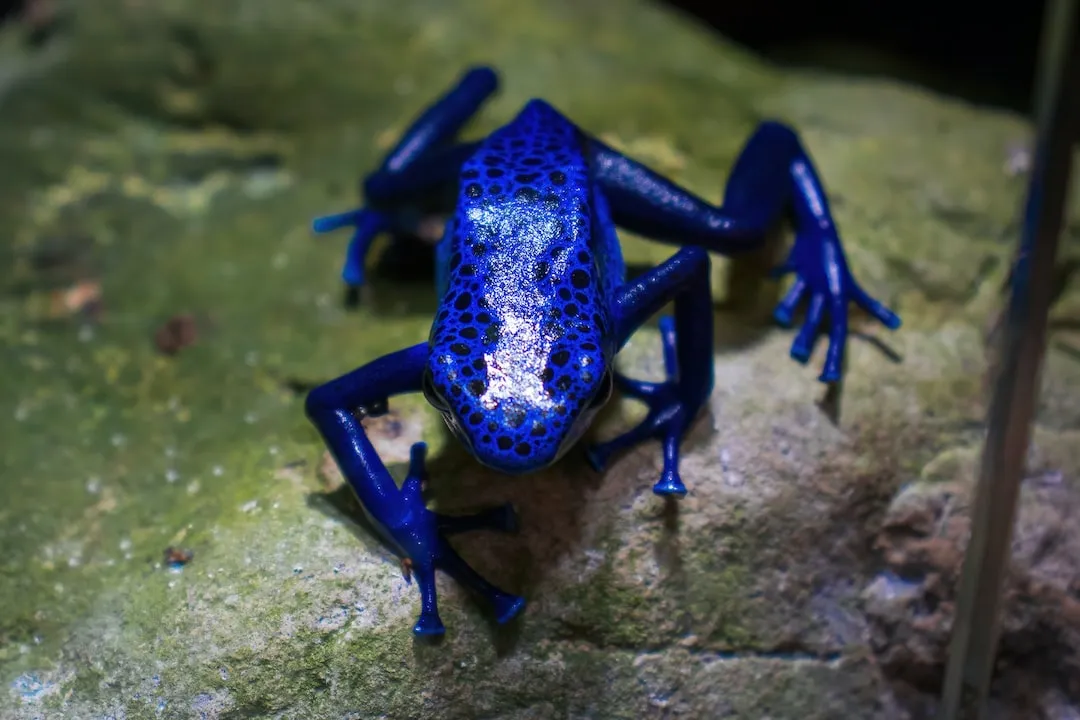
The blue poison dart frog, also known as the blue poison arrow frog or Dendrobates tinctorius, is a vibrant and mesmerizing creature found in the rainforests of Central and South America. With its bright blue coloration and distinct patterns, it is no wonder why this frog is highly sought after in the exotic pet trade. However, beneath its beautiful exterior lies a deadly secret that makes it one of the most toxic animals on the planet.
A Lethal Defense Mechanism
The poisonous nature of the blue poison dart frog is crucial to its survival in the wild. The bright colors that adorn its skin serve as a warning to potential predators that it is highly toxic and should be avoided at all costs. Just one touch of the frog’s skin can be lethal to a small animal or even a human.
The Potency of the Poison
The toxicity of the blue poison dart frog’s skin is so potent that indigenous people have been known to use it to poison their blowgun darts for hunting. The poison, known as batrachotoxin, is a powerful neurotoxin that affects the nervous system, causing paralysis and even death. It is estimated that the skin of a single blue poison dart frog contains enough poison to kill up to 20,000 mice or 10 adult humans.
A Deadly Diet
So, where does the blue poison dart frog get its lethal toxin? Surprisingly, these frogs do not produce the poison themselves. Instead, their toxicity is acquired through their diet. In the wild, these frogs primarily feed on small arthropods, such as ants, termites, and various beetles, which are rich in alkaloids. These alkaloids are then concentrated in the frog’s skin, making it deadly to predators.
Adaptations for Survival
Evolution has played a key role in the blue poison dart frog’s ability to survive and thrive despite its toxic nature. One of its adaptations is the ability to recognize and avoid consuming toxic alkaloids. Research has shown that captive-bred blue poison dart frogs raised on a diet devoid of alkaloids do not produce toxic skin secretions, highlighting the importance of their natural diet in acquiring toxicity.
Furthermore, the blue poison dart frog has developed resistance to its own poison. While other animals would be severely affected or killed by the batrachotoxin, the frogs themselves are immune to its deadly effects. This unique adaptation allows them to safely store and utilize the toxins for their own defense, without experiencing any harm.
In conclusion, the blue poison dart frog’s colorful and striking appearance may captivate the eyes, but it is their toxic secret that truly sets them apart. Their lethal poison, acquired through their diet, serves as a powerful defense mechanism against would-be predators. This fascinating adaptation showcases the wonders of nature’s ability to create extraordinary creatures with deadly secrets.
The Behavior of the Blue Poison Dart Frog: Communication and Social Interactions
Vocal Communication: Unique Calls and Begging Choruses
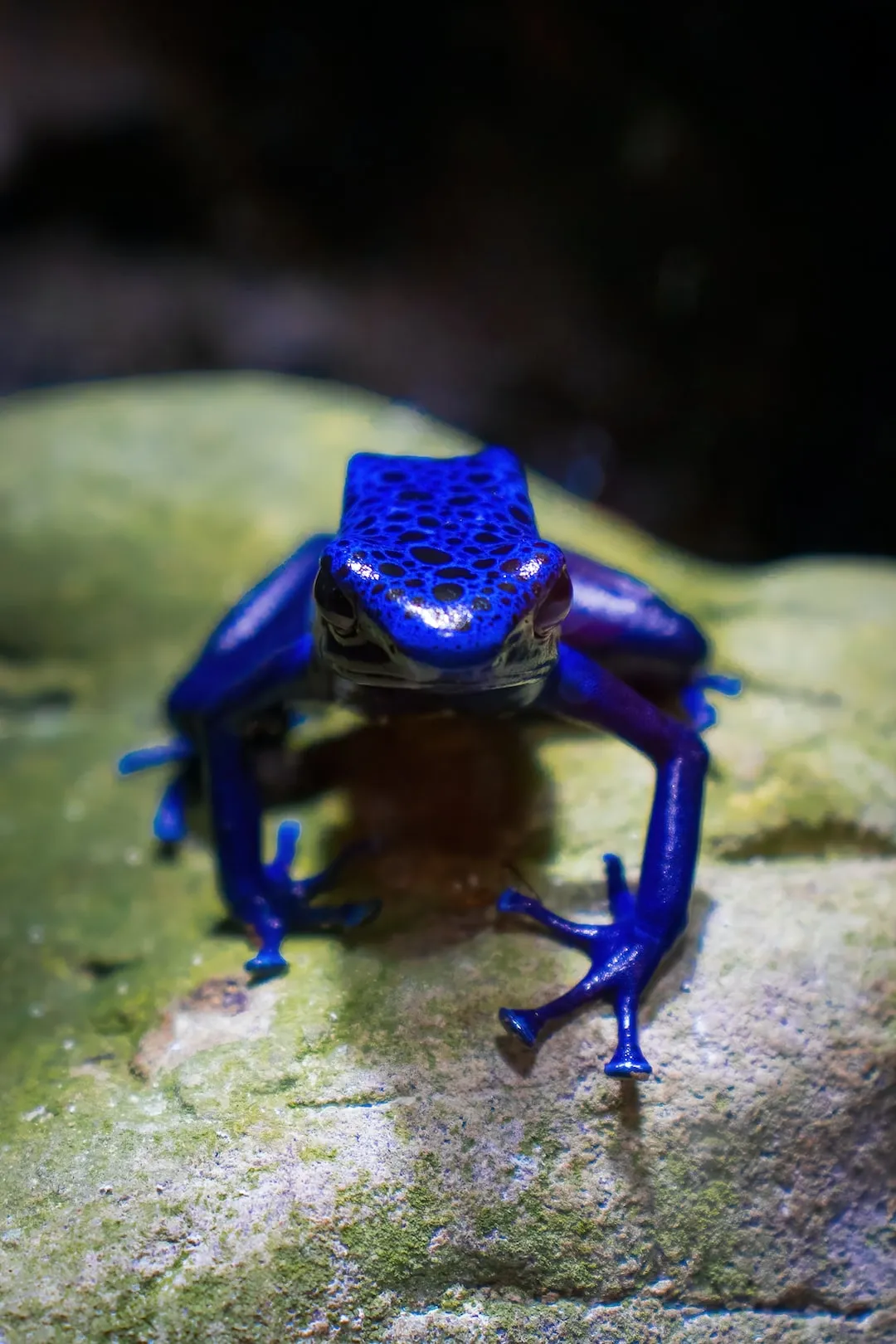
The blue poison dart frog (Dendrobates azureus), also known as the blue poison arrow frog, is a fascinating creature renowned for its striking azure blue coloration and toxicity. Beyond its appearance and lethal defense mechanism, the behavior of these frogs is equally captivating, particularly when it comes to communication and social interactions.
One of the most interesting aspects of blue poison dart frogs’ behavior is their vocal communication. While most frogs use calls to attract mates, defend territories, or establish dominance, these small amphibians have developed a unique repertoire of calls. They use these calls to communicate with their kin, neighbors, and potential mates. Each individual frog has its own distinct call, allowing them to be identified by their vocalizations.
Additionally, blue poison dart frogs engage in what is known as ”begging choruses.” After the eggs hatch, the tadpoles are carried by the male frog to small pools of water. During this process, both the male and female frogs emit high-pitched calls, which are thought to encourage the tadpoles to venture out into the water. The astonishing part is that these calls synchronize, creating a beautiful chorus that resonates through the rainforest.
Posturing and Territory Defense
Apart from vocal communication, blue poison dart frogs exhibit interesting behaviors related to social interactions and territory defense. In their natural habitat of the rainforests of South America, these frogs establish territories to secure resources and attract mates. The males are particularly territorial, and they engage in posturing displays to defend their turf.
When threatened by an intruder, the male blue poison dart frog will puff up its body and extend its limbs, displaying its vibrant blue coloration. This serves as a warning to potential rivals, indicating that it is a fierce and toxic adversary. Interestingly, the intensity of the territorial displays varies, depending on the proximity of the rival frogs. When a rival is close, the displays become more aggressive, including lunging and wrestling movements.
Courtship and Parental Care
Courtship in blue poison dart frogs is an elaborate and fascinating display. After selecting a suitable territory, the male frog initiates courtship by making a series of calls and performing intricate movements. If a female is intrigued, she responds by making her own soft calls, signaling her interest. This interaction may continue for several minutes before the male frog escorts the female to a suitable egg-laying site.
Once the female deposits her eggs, the male takes on the responsibility of guarding them. He meticulously tends to the eggs, keeping them moist and warding off potential threats. The male monitors the humidity levels by urinating on the eggs – a unique behavior observed in few frog species. This parental care continues until the eggs hatch, and the male transports the tadpoles on his back to small water bodies.
In conclusion, the behavior of the blue poison dart frog goes far beyond its stunning appearance and toxic nature. Their unique vocal communication, posturing displays, and parental care all contribute to the intriguing social interactions of these small but captivating creatures. The more we learn about their behavior, the more we appreciate their complexity and the delicate balance they contribute to the rainforest ecosystem.